How to Avoid Medical Scams: The 2026 Definitive Editorial Guide
In the rapidly digitizing healthcare ecosystem of 2026, the vulnerability of the patient has become a high-value commodity. Medical scams have evolved from the itinerant “snake oil” peddlers of the past into sophisticated, multi-layered digital operations that leverage artificial intelligence, social engineering, and the systemic complexities of insurance billing. Protecting oneself in this environment requires more than skepticism; it demands a structured, analytical approach to verifying every medical interaction, from a targeted social media advertisement to an unexpected invoice.
The psychological weight of a health crisis often bypasses the rational filters we apply to other financial decisions. Fraudsters exploit this biological imperative, the drive to survive and heal, to push unproven “miracle” cures or to extract sensitive insurance data under the guise of urgent clinical necessity. As high-deductible health plans and decentralized telehealth options become the norm, the “surface area” for potential exploitation has widened significantly.
Understanding “how to avoid medical scams.”
Mastering how to avoid medical scams requires a shift from passive consumption to active verification. In a clinical context, a “scam” is defined as any health-related product, service, or billing practice that intentionally misleads for financial gain, often at the expense of patient safety. This is not limited to “quackery,” the promotion of unproven remedies, but extends into “administrative fraud,” such as upcoding, phantom billing, and identity theft within the insurance system.
Multi-Perspective Explanation
From a Regulatory Perspective, the challenge is that scams often operate in the “gray zones” of the law, such as the supplement industry, where products are not vetted for efficacy before reaching the market. From a Technological Perspective, the rise of AI-generated deepfakes and voice cloning has made it possible for scammers to impersonate trusted physicians or family members in “emergency” health scenarios. Finally, from a Psychological Perspective, scams are designed to trigger “Cognitive Tunneling,” where the fear of a diagnosis or the hope for a cure narrows a person’s ability to see red flags.
Oversimplification Risks
The primary risk in the public’s understanding of medical fraud is “Binary Thinking”—the belief that if something is sold on a professional-looking website or mentions “Nobel Prize-winning research,” it must be legitimate. Modern fraud is highly “aestheticized”; it uses the language of science (terms like cellular resonance or quantum healing) to mimic authority. A professional defense avoids this by prioritizing “Evidence-Based Verification,” requiring clinical trial data from reputable, peer-reviewed journals rather than anecdotal testimonials.
Contextual Background: The Evolution of Health Fraud
Medical fraud is as old as medicine itself, but its delivery mechanisms have undergone a radical transformation. We have moved from the “Patent Medicine” era of the 19th century, where unregulated tonics contained alcohol or opium, to the “Digital Quackery” of 2026.
The mid-20th century was defined by “Institutional Fraud,” where illegitimate clinics offered “alternative” cancer treatments that the FDA eventually shuttered. Today, the threat is decentralized. With the explosion of GLP-1 weight loss drugs and “Longevity Medicine,” scammers have moved into the shadows of social media algorithms, using AI to generate fake patient success stories and “white-coat” authority figures. The modern scam is no longer a bottle; it is a subscription, a data-harvesting link, or a fraudulent insurance claim.
Conceptual Frameworks for Deception Detection
Strategic consumers utilize specific mental models to evaluate the validity of medical claims.
1. The “Red-Flag-to-Complexity” Ratio
This model posits that the more complex a disease is, the less likely there is a “simple, secret” cure. If a product claims to treat disparate conditions—such as cancer, autism, and chronic fatigue—with a single mechanism, it fails the basic biological principle of specificity.
2. The “Inverted Evidence Pyramid.”
Scammers often place “Testimonials” at the top of their evidence. A high-tier medical defense flips this pyramid, placing “Double-Blind, Placebo-Controlled Trials” at the top. If a provider cannot produce a PubMed-indexed study for their treatment, the clinical validity is effectively zero.
3. The “Urgency-to-Risk” Framework
This model evaluates the timing of a medical offer. Legitimate medical breakthroughs are rarely delivered via cold calls or “limited-time” offers. If the primary driver of a medical decision is “Act Now,” the risk of it being a scam increases exponentially.
Key Categories of Medical Exploitation
Medical scams in 2026 generally fall into several operational silos:
| Category | Primary Tactic | Target | Significant Danger |
| Miracle Cure Scams | “Secret” or “Natural” cures for terminal illness. | Chronic/Terminal patients. | Delay of life-saving care. |
| Phantom Billing | Charging insurance for services never received. | Insurance/Medicare holders. | Exhaustion of benefits; ID theft. |
| Diagnostic Scams | Unproven “Health Scans” (e.g., live blood analysis). | The “Worried Well.” | False positives leading to anxiety. |
| Digital Pharmacy | Counterfeit or unapproved drugs (GLP-1s). | Weight loss/Longevity seekers. | Toxic ingredients; liver failure. |
| Genetic Testing Fraud | “Free” DNA kits to harvest info. | Seniors/Medicare recipients. | Massive insurance overbilling. |
| AI Voice Phishing | Impersonating doctors/relatives in crisis. | Family members/Caregivers. | Immediate financial loss via wire. |
Realistic Decision Logic
The choice to engage with a new treatment must be driven by “Secondary Verification.” If you find a “Miracle Cure” online, the first step is not to buy, but to check the FDA Health Fraud Product Database or consult a primary care physician who is not affiliated with the product.
Detailed Real-World Scenarios and Decision Logic
The “Free” Genetic Screening
An elderly patient is approached at a community center with an offer for a “free” DNA test to prevent cancer, requiring only their Medicare number.
-
Decision Point: Convenience vs. Security.
-
Analysis: Genetic tests are only useful when ordered by a clinician within a specific diagnostic context. “Free” kits are usually a front to bill Medicare thousands of dollars.
-
Outcome: The patient refuses, recognizing that a Medicare number is a financial key that must be protected like a credit card.
The “Targeted” GLP-1 Ad
A person struggling with weight sees a social media ad for “Compounded Semaglutide” at 80% offthe retail price, requiring no doctor’s visit.
-
Constraint: High cost of legitimate medication.
-
Second-Order Effect: Counterfeit GLP-1s in 2026 have been found to contain insulin or heavy metals.
-
Outcome: The person chooses to wait for a legitimate prescription, realizing that “unverified chemistry” is a life-threatening risk.
Planning, Cost, and Resource Dynamics
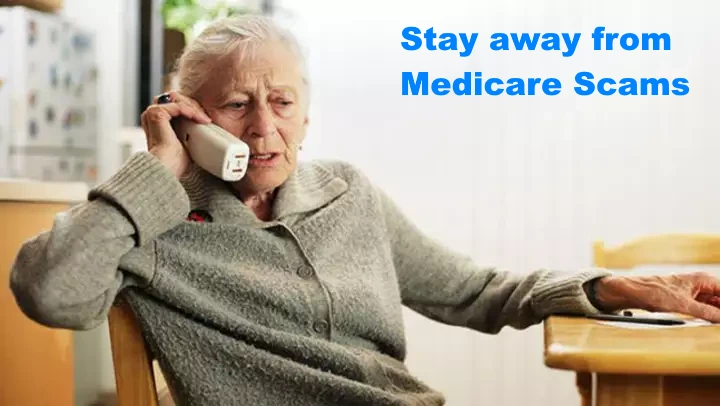
The “Cost” of a medical scam is rarely just the initial payment; it is the compounding loss of health and insurance standing.
Financial and Health Loss Estimates (2026)
| Type of Scam | Direct Cost Range | Indirect / Long-term Cost |
| Fake Supplements | $50 – $500 | Organ damage; delayed treatment costs. |
| Insurance Identity Theft | $0 (initially) | Thousands in legal fees; loss of coverage. |
| Fraudulent Clinic Fees | $5,000 – $50,000 | Accelerated disease progression. |
| Counterfeit Meds | $200 – $1,000 | Emergency Room costs for toxicity. |
| Billing Upcoding | $100 – $2,000 | Higher future insurance premiums. |
Tools, Strategies, and Support Systems
A robust defense against medical fraud relies on a “Verification Stack”:
-
FDA Health Fraud Database: A searchable list of products that have been flagged for deceptive claims.
-
The “Explanation of Benefits” (EOB) Audit: A monthly review of insurance statements to ensure every “Charge” matches a “Service” actually received.
-
National Provider Identifier (NPI) Lookup: Verifying that a “Doctor” online is actually a licensed medical professional in their stated jurisdiction.
-
ClinicalTrials.gov: Checking if a “new treatment” is actually part of an authorized research study.
-
Reverse Image Search: Checking if “Patient Testimonials” are actually stock photos or AI-generated faces.
-
Medical Billing Advocates: Professionals who can be hired to dispute fraudulent charges on your behalf.
-
Multi-Factor Authentication (MFA): Essential for patient portals to prevent “Medical Identity Theft.”
Risk Landscape and Failure Modes
The “Medical Fraud Taxonomy” includes several ways a patient can be compromised:
-
The “Substitution” Risk: When a patient stops a proven medication (like chemotherapy) in favor of an unproven “alkaline diet,” leading to preventable death.
-
Data “Re-victimization”: Once a person falls for a medical scam, their information is often sold on “Sucker Lists,” leading to a barrage of future fraud attempts.
-
The “Nocebo” Effect: Fraudulent diagnostic tests (like fake “food sensitivity” tests) can lead patients to restrict their diet unnecessarily, causing malnutrition.
-
Legal Liability: In some cases, participating in “Insurance Optimization” schemes can make the patient a legal co-conspirator in healthcare fraud.
Governance, Maintenance, and Long-Term Adaptation
Protection is a continuous process of “Information Hygiene.”
-
Quarterly Insurance Review: Checking your “Claim History” for procedures you don’t recognize.
-
Device Security Updates: Ensuring that telehealth apps and patient portals are running the latest security patches to prevent data breaches.
-
Checklist for Treatment Verification:
-
Is the product sold only through a “special” website? (Red Flag)
-
Does the treatment claim to cure “multiple unrelated” diseases? (Red Flag)
-
Can I find a peer-reviewed study for this on PubMed?
-
Did my actual doctor approve this?
-
Is there an “Exit Strategy” if the treatment causes a reaction?
-
Measurement, Tracking, and Evaluation
How do you evaluate if you are successfully managing the risk of scams?
-
Leading Indicators: The frequency with which you check your EOB; the number of “Verification Steps” you take before trying a new supplement.
-
Qualitative Signals: A feeling of “Empowerment” rather than “Urgency” when making health decisions.
-
Documentation Examples: Keeping a “Medical Journal” of every doctor visited and every medication taken, which serves as a definitive counter-record to fraudulent billing attempts.
Common Misconceptions and Oversimplifications
-
“If it’s on TV/Social Media, it must be vetted”: Media platforms do not verify the medical accuracy of the ads they sell.
-
“A ‘Doctor’ in the ad means it’s safe”: Scammers often hire actors or use AI to create “Doctors” who do not exist.
-
“Natural means no side effects”: Some of the most potent toxins in the world are “natural” (e.g., arsenic, hemlock).
-
“My insurance will catch the fraud”: Most insurance companies use automated systems that may not flag a “phantom bill” if it looks statistically normal.
-
“I’m too smart to be scammed”: Scams are designed for emotional states, not intelligence levels. Even doctors have fallen for medical scams.
-
“The Nobel Prize mention proves it”: Scammers frequently misuse the names of Nobel laureates or prestigious universities (like Harvard or Mayo Clinic) without permission.
Ethical and Practical Considerations
The ethics of the medical marketplace in 2026 are strained by the “Democratization of Health Information.” While access to data is good, it has created a “Truth Decay” where a TikTok influencer has as much reach as a board-certified surgeon. We must consider the “Opportunity Cost” of scams: every dollar spent on a fake cure is a dollar not spent on legitimate prevention. Furthermore, there is a social responsibility to report scams to the FTC or FDA; silence allows the “Viral Spread” of fraud to continue, harming the most vulnerable members of society.
Conclusion
The ability of a patient to navigate the modern medical landscape depends on their “Dermal Integrity,” the strength of the barrier between themselves and the predatory elements of the marketplace. Understanding how to avoid medical scams is not about living in fear, but about operating with a high-resolution awareness of clinical reality. In 2026, the best “medicine” is often a healthy dose of skepticism combined with a rigorous commitment to evidence. By protecting your data, verifying your providers, and demanding peer-reviewed proof, you ensure that your health journey remains on a path of genuine healing.